Spectrophotometer YS series 45/0
Spectrophotometer YS series 45/0


Spectrophotometer YS series 45/0



Lorem ipsum

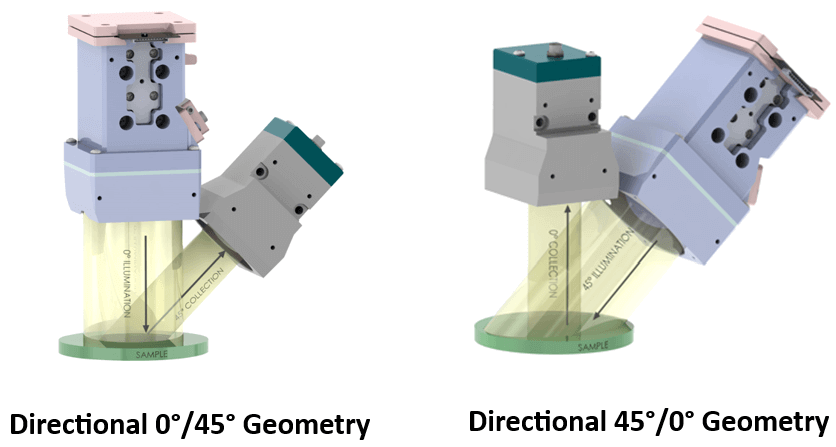
Directional Geometry
Directional 45°/0° geometry has illumination at a 45° angle and measurement at 0°. The inverse 0°/45° geometry has illumination at 0° and measurement at 45°. For most applications, these two geometries are considered synonymous.
Both exclude the specular reflection in the measurement (specular excluded). This provides measurements that correspond to visual changes in sample appearance due to either changes in pigment color or surface texture and more closely match how the human eye ‘sees’ color. These geometries are best used for end-of-line color quality control.
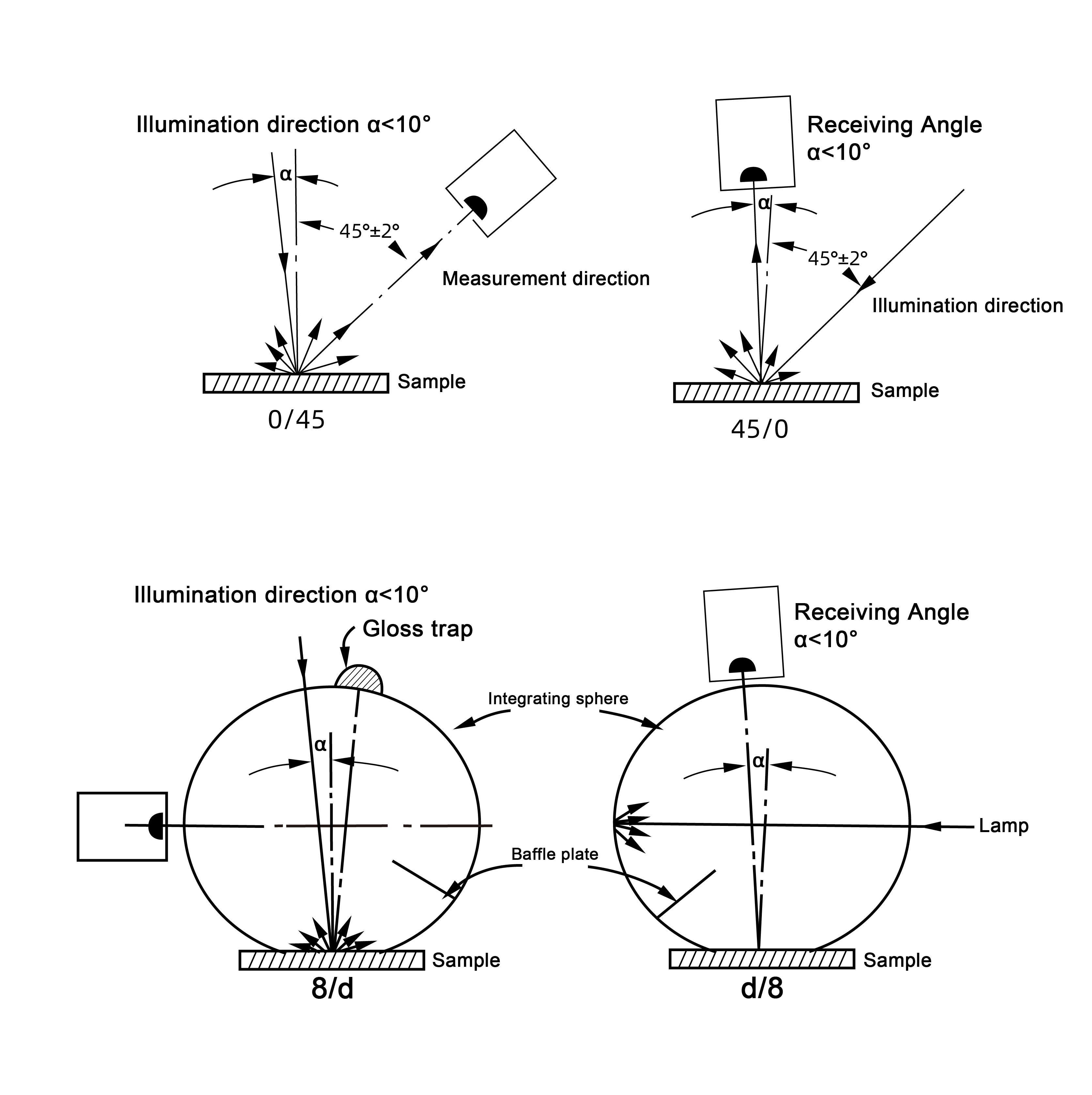
The differences between the colorimeter structures 45/0, 0/45, 8/d, and d/8 lie in how the light source and detector are positioned relative to the sample. Here’s a breakdown:
-
45/0 Structure:
-
Light Source: Positioned at a 45° angle to the sample.
-
Detector: Positioned at 0° (normal) to the sample.
-
Characteristics: This setup minimizes the effects of surface gloss and texture, making it suitable for materials like paints and printed items. It closely simulates how the human eye perceives color.
-
-
0/45 Structure:
-
Light Source: Positioned at 0° (normal) to the sample.
-
Detector: Positioned at a 45° angle to the sample.
-
Characteristics: Similar to the 45/0 structure, it is used to measure color while minimizing the influence of surface gloss and texture. The main difference is the positioning of the light source and detector.Very few applications
-
-
8/d Structure:
-
Light Source: Positioned at 8° to the sample.
-
Detector: Uses an integrating sphere to collect diffusely reflected light from all directions.
-
Characteristics: This setup is ideal for measuring materials with angle-dependent color changes, as it averages out the effects of surface texture and gloss. Commonly used for plastics, textiles, and other materials.This technology has been phased out and is still used by individual manufacturers
-
-
d/8 Structure:
-
Light Source: Uses an integrating sphere to diffusely illuminate the sample from all directions.
-
Detector: Positioned at 8° to the sample.
-
Characteristics: Similar to the 8/d structure, it is used for materials with angle-dependent color changes. The integrating sphere ensures uniform illumination, reducing the impact of surface texture and gloss.This is the type of colorimeter that is usually purchased
-